

Septic Tank Pumping: 5 Vital Tips to Prevent a Disastrous Overflow
A Septic tank pumping system failure is more than just a minor inconvenience, it can be a costly and unsanitary disaster. When your tank reaches its capacity, the excess waste has nowhere to go but back into your home or onto your lawn.
Understanding how to troubleshoot early symptoms and maintaining a strict care routine are the best ways to keep your plumbing running smoothly. Here are five vital tips to help you prevent a septic overflow.
Read: Clogged drain service near me: 5 Brilliant Ways to Restore Your Pipes Fast
1. Recognize the Early Warning Signs
You should never wait for sewage to back up into your bathtub to realize there is a problem. Pay close attention to slow-moving drains in your sinks or toilets, especially if multiple fixtures are acting up at once.
Strange gurgling sounds coming from your pipes are often a sign that air is trapped by a rising waste level. You might also notice patches of exceptionally lush, green grass over your drainfield, which indicates that liquid is leaking or overflowing underground.
2. Maintain a Consistent Pumping Schedule
The most effective way to prevent a disaster is to remove the solid waste before it escapes the tank. Most experts recommend having a professional pump your septic system every three to five years.
The exact timing depends on the number of people living in your home and the overall size of your tank. Regular pumping prevents sludge from entering the drainfield, which is often the most expensive part of the system to repair.
Read: How Often Should You Get Your Drains Cleaned?
3. Manage Your Water Usage
Septic tank pumping need time to separate solids from liquids. If you send too much water into the tank at once, the system becomes overwhelmed and pushes unseparated waste into the drainage pipes.
- Space out your laundry: Try to wash one or two loads a day rather than doing five loads on a single Saturday.
- Fix leaks immediately: A running toilet can add hundreds of gallons of unnecessary water to your tank every week.
- Install low-flow fixtures: Using high-efficiency showerheads and toilets reduces the daily burden on your system.
Read: Review: The 10 Most Common Plumbing Issues We Solved This Year
4. Be Selective About What You Flush
Your Septic tank pumping relies on healthy bacteria to break down organic waste. Flushing harsh chemicals or non-biodegradable items can kill these bacteria or cause physical blockages.
Never dispose of “flushable” wipes, paper towels, or feminine hygiene products in the toilet, as they do not break down like toilet paper. In the kitchen, avoid letting fats, oils, and grease go down the drain. These substances solidify as they cool and can completely seal off your inlet pipes.
Read: Financing Options for Major Plumbing Projects (Water Heater, Repipe)
5. Protect Your Drainfield
The drainfield is the area of your yard where treated liquid is filtered back into the soil. To keep this area functioning, you must prevent the soil from becoming compacted or oversaturated.
Do not park cars or drive heavy equipment over the septic area, as this can crush the underground pipes. Additionally, ensure that your roof gutters and landscape drainage are directed away from the drainfield to prevent the ground from becoming waterlogged.
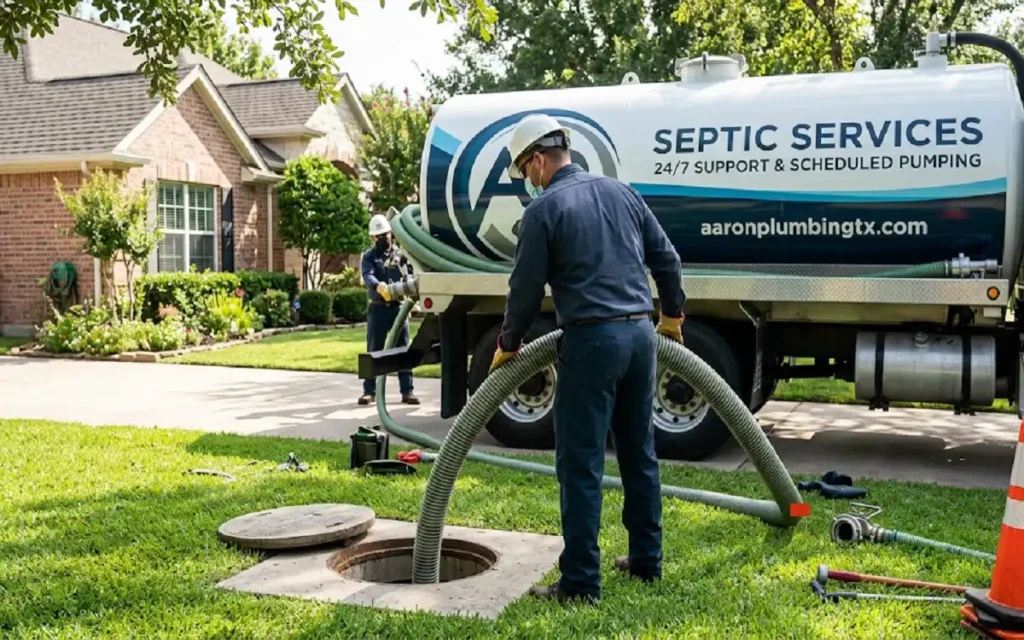
If you notice foul odors or sluggish drains despite your best efforts, it is likely time for a professional inspection. Catching these issues early through routine service is the only way to guarantee your home stays safe and dry.
or More Details Visit Aaron Plumbing TX Contact Page


