

When to Repair vs. Replace a Faucet or Toilet
When to Repair vs. Replace a Faucet or Toilet? Choosing between a quick fix and a total replacement for your plumbing fixtures can save you hundreds of dollars. Most homeowners struggle to decide if a leaking faucet or a running toilet is a minor nuisance or a sign of system failure.
The aaronplumbingtx share this information about a clear framework to help you make the best financial and functional decision for your home in 2026.
When to Repair vs. Replace a Faucet or Toilet
Faucets are often the most used fixtures in a house. While they are built to last, constant friction and mineral buildup eventually take a toll on internal components.
Read: Toilet Clog: DIY Tips for Clearing a Minor Toilet Clog
Choose Repair If:
- The issue is a simple drip. Most leaks are caused by a worn-out washer, O-ring, or ceramic cartridge. These parts are inexpensive and usually take less than an hour to swap.
- The fixture is high-quality. If you invested in a premium brand, finding replacement parts is typically easy. High-end models are designed to be serviced rather than discarded.
- The finish is still perfect. If the exterior looks new and matches your bathroom decor, a mechanical repair is the most logical step.
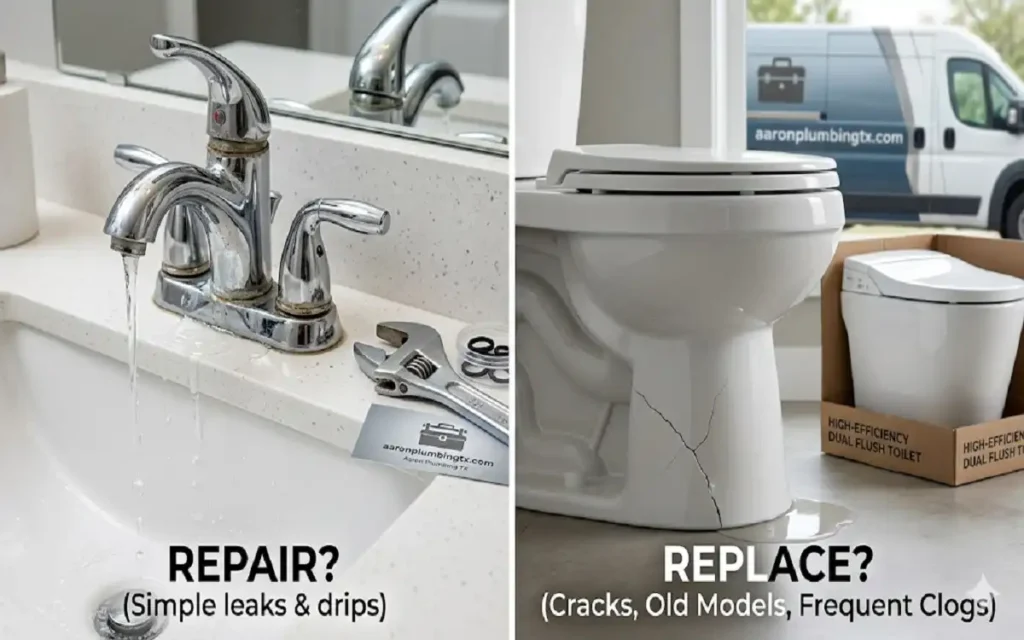
Choose Replacement If: Faucet or Toilet
- Replacement parts are obsolete. Some older or “off-brand” faucets do not have available cartridges or valves. In these cases, searching for rare parts often costs more than a new unit.
- The body is corroded. If you see pitting or green buildup on the metal itself, the structural integrity is compromised. Internal corrosion will lead to repeated leaks regardless of new seals.
- Repair costs exceed 50 percent of a new unit. If a plumber needs several hours and expensive components to fix an old faucet, a modern replacement is a better investment.
Read: Top 5 Reasons for a High Water Bill in the Summer
When to Repair vs. Replace a Toilet
Toilets are remarkably durable, but their internal moving parts and seals are prone to wear. Understanding the difference between a mechanical glitch and a structural failure is vital for your safety.
Choose Repair If: Faucet or Toilet
- The toilet is “running” constantly. This is almost always a faulty flapper or fill valve. These repairs are the most common plumbing tasks and are very affordable.
- The handle is loose or sticking. A simple adjustment to the lift chain or replacing the handle lever can restore full functionality for a few dollars.
- The seat or lid is damaged. Cosmetic issues like a cracked seat do not require a full porcelain replacement.
Choose Replacement If: Faucet or Toilet
- The porcelain has a crack. Even a hairline crack in the tank or bowl is a serious risk. A cracked toilet can fail unexpectedly and cause catastrophic water damage to your flooring.
- You are experiencing frequent clogs. Older toilets often have “lazy” flushes or internal mineral scaling that narrows the trapway. Modern 2026 models offer superior flushing power with much less water.
- The toilet is over 15 years old. Older units use significantly more water per flush than current high-efficiency models. Upgrading will lower your monthly utility bills and pay for itself over time.
Read: Why Your Outdoor Hose Spigot is Leaking (and How to Fix It)
The 50 Percent Rule of Plumbing
A professional standard for decision-making is the 50 percent rule. If the cost of the repair, including labor and parts, is more than half the price of a brand-new fixture, you should replace it.
Newer fixtures offer better warranties and updated technology. Investing in a new unit ensures you won’t be calling a plumber back for the same issue in six months.
Quick Decision Checklist
- Safety First: Replace any fixture with structural cracks or active leaks inside walls.
- Frequency: If you have repaired the same item twice in the last year, it is time for a replacement.
- Efficiency: Compare your current water usage to modern standards to see potential savings.
- Aesthetics: If you are planning a renovation soon, do not waste money on temporary repairs for outdated styles.

For More Details Visit Aaron Plumbing TX Contact Page


