

The Difference Between a Plumber and a Handyman
When a pipe leaks or a faucet drips, the first instinct is to get it fixed fast. However, choosing between a professional plumber and a local handyman can be the difference between a permanent solution and a costly mistake.
Understanding the distinct roles of these professionals ensures your home stays functional and your insurance remains valid. Here is how to distinguish between the two based on their training and the scope of work they handle.
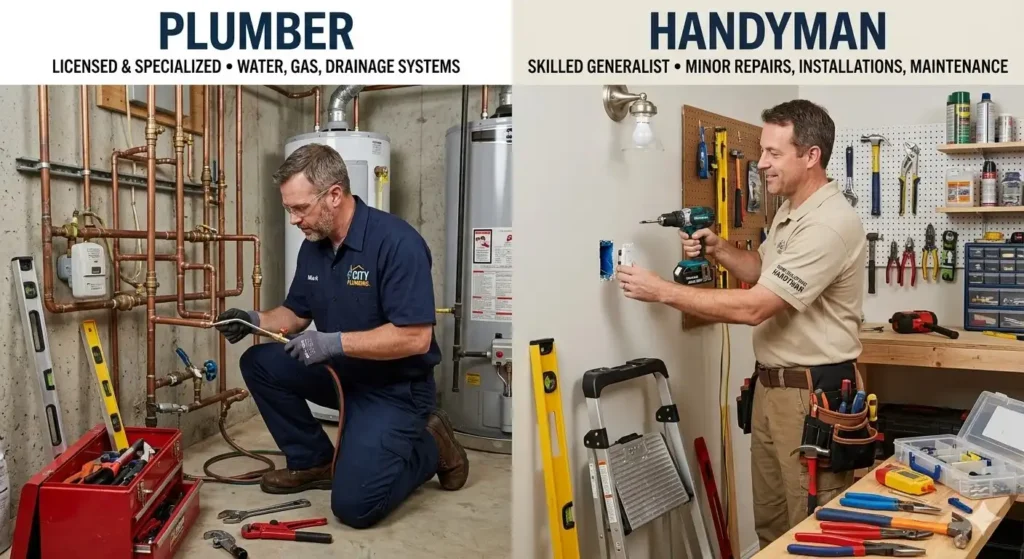
The Professional Plumber: A Specialist
A licensed plumber is a highly trained specialist who focuses exclusively on water, gas, and drainage systems. They must complete thousands of hours of apprenticeship and pass rigorous state exams to earn their credentials.
This extensive education allows them to navigate complex blueprints and strictly follow local building codes. When you hire a plumber, you are paying for technical expertise and a guarantee that the work meets legal safety standards.
When to call a plumber
You should prioritize a licensed professional for any task that involves the “skeleton” of your home. This includes:
- Installing or moving gas lines for new appliances.
- Full bathroom or kitchen remodeling projects.
- Repairing or replacing a main sewer line.
- Installing high-tech smart water shut-off valves or tankless water heaters.
The Handyman: A Generalist
A handyman is a versatile professional who excels at a wide variety of minor home repairs. While they are often skilled with tools, they typically do not hold a specific trade license for plumbing or electrical work.
Their strength lies in routine maintenance and small “to-do” list items. They are an excellent, cost-effective choice for tasks that do not require a permit or structural changes to your plumbing system.
When to call a handyman
If the job is cosmetic or involves a simple external fix, a handyman is usually the right choice. Consider them for:
- Replacing a showerhead or a basic kitchen faucet.
- Clearing a simple clogged drain with a plunger or hand snake.
- Patching drywall after a leak has already been fixed.
- Installing towel bars or caulking around a bathtub.
Why the distinction matters
The most significant difference between these two roles involves licensing and insurance. Most jurisdictions require a master plumber’s license for any work that happens “behind the wall,” such as re-piping or valve replacements.
If an unlicensed individual performs major plumbing work and a flood occurs later, your homeowners insurance may deny the claim. A licensed plumber carries specific liability insurance that protects your property if something goes wrong during a complex install.
Making the final decision
To decide who to hire, ask yourself if the job requires a city permit. If the answer is yes, you must hire a licensed plumber to ensure the work is inspected and documented correctly.
For everything else, a handyman offers a convenient way to keep your home in top shape without the higher service fees of a specialist. Always verify references and ask for proof of insurance before any work begins on your property.

For More Details Visit Aaron Plumbing TX Contact Page


